
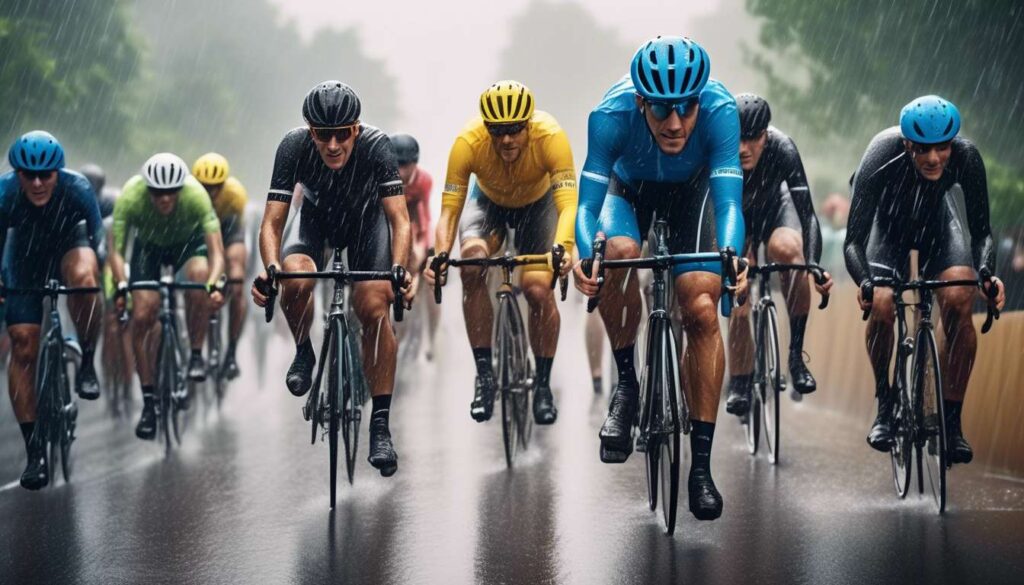
As avid cycling enthusiasts, we know firsthand how the weather can dramatically influence the outcome of a race. Whether we’re braving the scorching sun, navigating through relentless rain, or battling fierce winds, the elements test our resilience and adaptability in ways that can make or break our performance.
In the world of competitive cycling, weather conditions are not just a backdrop but a dynamic participant, shaping strategies, equipment choices, and even the mental fortitude of the racers.
Together, we’ve experienced:
- The thrill of a tailwind propelling us forward
- The trepidation of a slippery descent in the rain
- The exhaustion of pushing against a relentless headwind
As we delve into this article, we’ll explore the myriad ways weather impacts cycling races:
- Physiological Challenges: How different weather conditions affect a cyclist’s body and performance.
- Strategic Decisions: The adjustments in tactics required to cope with varying weather.
- Preparation for Unpredictability: Understanding weather elements to better prepare for the uncertainties of outdoor racing.
Understanding these elements can help us better prepare for the unpredictable nature of outdoor racing.
Impact on Speed and Endurance
Weather conditions significantly influence cyclists’ speed and endurance during races. As a tight-knit community, we recognize the crucial impact these factors have on our performance.
Sunny Conditions:
- When the sun’s beating down, energy drains faster.
- Endurance becomes a real challenge.
Cool, Overcast Days:
- These conditions can boost stamina.
- Cyclists are able to push harder and maintain speed longer.
Wind:
- Wind can be a friend or foe.
- A tailwind provides an extra push, enhancing performance.
- A headwind demands more effort, testing endurance.
Rain:
- Rain introduces an additional layer of complexity.
- Wet roads require cautious riding, slowing us down.
- It tests our ability to maintain control and precision.
In these challenging moments, our shared experiences and camaraderie become essential, encouraging one another to persevere. As cyclists, we are united by these challenges, knowing that every race is a testament to how we adapt and overcome the ever-changing weather.
Risk Management in Extreme Conditions
Riding in Extreme Conditions
Riding in extreme conditions demands that we prioritize safety and strategize effectively to mitigate risks. As a community of cyclists, we know that unpredictable weather can challenge our endurance and impact our performance. When faced with adverse conditions like heavy rain, intense heat, or strong winds, we must adapt our strategies accordingly.
Adapting Strategies
Together, we can share insights and experiences to handle these challenges. Communication becomes crucial when weather tests our limits, ensuring that everyone understands the plan and any necessary adjustments.
- Focus on maintaining a steady pace.
- Stay aware of surroundings.
- Be ready to respond to sudden changes.
Proactive Measures
By being proactive, we reduce the risk of accidents and ensure that we can finish the race safely. It’s in these moments that our collective resilience shines.
Community Support
Let’s continue to support each other, learning from every race and strengthening our bond as a cycling community that thrives despite the elements.
Gear Selection and Performance
Selecting the right gear is crucial for maximizing efficiency and safety during cycling races, especially when faced with unpredictable weather conditions. As a community of cyclists, we know that each element of our gear can directly impact our endurance and performance.
Rainy Weather:
- Waterproof jackets
- Waterproof gloves
These items help keep us dry and maintain our focus on the road.
Windy Conditions:
- Aerodynamic helmets
- Aerodynamic clothing
These choices minimize resistance, allowing us to conserve energy and ride smoothly.
Colder Weather:
- Thermal jerseys
- Leg warmers
Layering becomes vital to retain heat without restricting movement, ensuring our muscles stay warm and responsive.
Hot, Sunny Days:
- Breathable fabrics
- Proper hydration systems
These help us maintain peak performance without overheating.
By selecting the right gear, we not only enhance our performance but also strengthen our bond as a group, supporting one another through every weather challenge we face together.
Mental Toughness and Resilience
In challenging weather conditions, we rely on mental toughness and resilience to push through and achieve our cycling goals. When the sky darkens and the winds pick up, our determination is tested. It’s not just about physical endurance; it’s about the strength of our minds.
We’ve all been there, facing the rain or the scorching sun, where every pedal stroke feels heavier. But it’s in these moments that our mental grit shines.
Weather can be unpredictable, and it demands more from us than just physical prowess. Our performance hinges on our ability to adapt and stay focused.
We remind ourselves that we’re not alone in this battle against the elements. Each one of us draws strength from the shared struggle, knowing that every raindrop or gust of wind is a test of our collective spirit.
Together, we embrace the challenge, knowing that enduring these tough conditions will:
- Make us stronger cyclists
- Deepen our sense of belonging in this community.
Team Dynamics and Coordination
In cycling races, our team’s success hinges on seamless coordination and effective communication.
When weather conditions shift, we adapt quickly to maintain our rhythm and focus. We know that our collective endurance and performance depend on how well we support each other. Every member plays a crucial role, whether it’s:
- Setting the pace
- Shielding from the wind
- Relaying crucial information
This unity ensures that we can tackle any weather challenge together.
Understanding each teammate’s strengths allows us to strategize effectively.
During a race, unpredictable weather can test our limits, but it also strengthens our bond. We rely on each other more than ever, using signals and shared experiences to navigate through adversity. This camaraderie fosters a sense of belonging, making us more resilient.
When we face harsh conditions, we don’t just endure; we thrive, knowing that our coordinated efforts enhance our collective performance. Together, we transform challenges into triumphs.
Role of Nutrition and Hydration
Proper nutrition and hydration are pivotal in sustaining our energy levels and optimizing performance throughout a cycling race.
As a cycling community, we know that weather conditions can significantly impact how we manage our food and fluid intake.
- On hot days, we’re more prone to dehydration, which can rapidly diminish our endurance and performance.
- Conversely, in cooler weather, we might underestimate our hydration needs, leading to fatigue.
We understand that fueling our bodies with the right balance of carbohydrates, proteins, and fats can make or break our race outcomes.
- It’s not just about eating; it’s about eating smart.
- When rain or wind challenges us, we adjust our nutrition strategy to ensure we stay strong and competitive.
By prioritizing hydration and nutrition, we enhance our ability to withstand the elements and maintain peak performance. Together, we navigate these challenges, supporting one another to ensure every ride is not just a race, but a shared journey towards success.
Recovery Challenges Post-Race
After crossing the finish line, we’re often faced with the crucial task of managing recovery to ensure our bodies heal and strengthen effectively. The weather conditions during the race play a significant role in shaping our recovery strategies. Whether we’ve endured scorching heat or chilling rain, each weather type impacts our muscles and endurance levels differently.
In hot weather:
- Dehydration can take a toll on our performance.
- Staying hydrated post-race is vital.
In cold and wet conditions:
- These may leave us shivering.
- Require warmth and proper clothing to prevent muscle stiffness.
Our community thrives on shared experiences and support, making it essential to discuss these challenges together.
We find that adapting our recovery plans based on the weather not only enhances our resilience but also fosters camaraderie among us. By sharing tips and insights, we strengthen our collective performance and ensure we’re ready for the next race, no matter what Mother Nature has in store.
Data Analysis for Weather Patterns
Analyzing historical weather data helps us anticipate conditions that could significantly impact our cycling races. By examining patterns, we can better prepare for the challenges weather poses to both our endurance and performance. Understanding these patterns fosters a sense of unity as we strategize together, knowing that we’re all contributing to the same goal: achieving our best under any circumstances.
We take into account several variables, all of which influence how our bodies perform on race day:
- Temperature
- Wind speed
- Precipitation
For instance, high temperatures may sap our endurance, while sudden rain might affect our grip and stability on the road. By anticipating these factors, we can adjust our training and race strategies accordingly.
Our community thrives on shared experiences and insights. When we analyze weather data, we’re not just predicting conditions; we’re building a collective knowledge base that strengthens our bond. Together, we harness this information to enhance our resilience and drive our success.
How do different weather conditions influence the popularity and viewership of cycling races?
Weather conditions play a significant role in the popularity and viewership of cycling races.
Unfavorable weather, such as:
- Rain
- Extreme heat
- Strong winds
can impact the overall experience for spectators. These conditions might deter people from attending live events, resulting in lower viewership.
Conversely, pleasant weather conditions can:
- Attract more fans
- Enhance the appeal of cycling races
Ultimately, weather can heavily influence the turnout and engagement levels of spectators at these events.
What are the historical instances of weather-related race cancellations or postponements in cycling?
We’ve seen numerous instances of weather-related race cancellations or postponements in cycling history. These situations often arise due to extreme conditions, such as:
- Heavy rain
- Strong winds
- Snowstorms
Such conditions pose safety risks for both riders and spectators alike.
These disruptions can be frustrating for fans and organizers. However, prioritizing safety is paramount in ensuring the well-being of everyone involved in the cycling event.
How do race organizers prepare and adapt their strategies in anticipation of unpredictable weather conditions?
We always keep a close eye on the weather forecast, allowing us to adjust our race strategies accordingly. By preparing for unpredictable weather conditions, we ensure the safety and success of the event.
Our team is constantly monitoring the situation, ready to make quick decisions to adapt to any changes. Flexibility and proactive planning are key in handling weather-related challenges and ensuring a smooth race day experience for all participants.
Conclusion
As a cyclist, you know that weather plays a crucial role in race outcomes. It can affect:
- Speed
- Endurance
- Gear selection
- Mental toughness
Being prepared for all conditions is key.
Remember to prioritize:
- Risk Management: Anticipate potential hazards and prepare accordingly.
- Team Coordination: Communicate effectively with your team for strategic advantages.
- Proper Nutrition: Ensure your body is fueled appropriately for the demands of the race.
Stay resilient and adapt to the elements. Analyzing weather patterns can enhance your racing strategies.
In the end, conquering the elements will lead you to success on the cycling track.